Each state and DC licenses its own teachers. There is no national teaching license, test, fee or reciprocity, so certification by state really means 51 separate rulebooks. This guide shows what they share and which page to read for each state. The 51-row table of teacher certification by state gives every state and DC a row: agency, routes, tests, fee, out-of-state route and read date.
This page is general information, not legal or career advice. Each state’s licensing agency decides every application, and rules, tests and fees change, often on 1 July. Confirm the current rules with the agency before you pay for a program, a test or fingerprints.
Every fee and rule below comes from the state guides in this section, citing the state’s own pages, rules or statutes.
What most states ask for
Most states ask for the same five things in some form: a bachelor’s degree, a state-approved preparation program or an alternative route, the tests the state names, a background check with fingerprints, and an application fee. The details differ. Some alternative routes need a school’s job offer first: North Carolina’s Residency License and Georgia’s GaTAPP both do, as read on 13 November 2026.
A first license, then a second
The state guides here describe a ladder: a first license for a set number of years, then a longer or renewable one after experience, mentoring or induction. California says credential, Texas certificate, Illinois license; they name the same kind of document. As read on 13 November 2026:
- California: a five-year Preliminary credential, cleared through a two-year induction program.
- New York: a five-year Initial certificate, then the Professional certificate after three years of teaching and a related master’s degree.
- Colorado: a three-year Initial Teacher License, then a seven-year Professional Teacher License after approved induction.
- Pennsylvania: Instructional I, good for six years of service, converted to the permanent Instructional II.
The 14 state guides
Each guide covers license levels, the routes the state lists, tests, fees, moving there with a license, renewal and substitutes.
California, Texas, Florida and New York
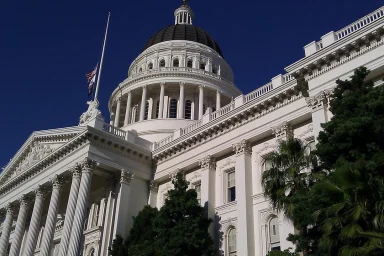
The California teaching credential comes from the Commission on Teacher Credentialing (CTC), which charges $100 per application plus a $2.65 online service fee (CTC leaflet CL-659, read 13 November 2026). Since 29 June 2024 a bachelor’s degree meets the basic skills requirement, so most applicants no longer need the CBEST.
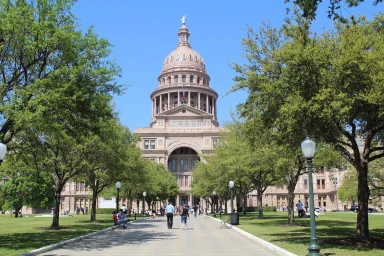
Texas teacher certification is handled by the Texas Education Agency (TEA). The standard certificate costs $78 as TEA charges it and lasts five years (19 TAC §230.101 and TEA’s pages, read 13 November 2026). See also Texas alternative certification.
Florida teacher certification runs from a Temporary Certificate, issued once, to the renewable Professional Certificate. The state charges $75 per subject to apply and $75 to upgrade from Temporary to Professional (the Florida Department of Education’s fee schedule and Rules 6A-4.0012 and 6A-4.0021, read 13 November 2026).
New York teacher certification is issued by the State Education Department (NYSED). It charges $50 per certificate title after a New York-approved program or $100 by individual evaluation, and fingerprinting costs $107.50 as of 1 October 2026 (NYSED’s pages, read 13 November 2026).
New Jersey, Pennsylvania, Illinois, Michigan and Ohio
New Jersey teacher certification starts with a Certificate of Eligibility (CE) or, after a preparation program, one with Advanced Standing (CEAS). The $170 CE or CEAS fee also covers the later provisional and standard certificates (N.J.A.C. 6A:9B-5.6(b)1, read 13 November 2026).
Pennsylvania teacher certification starts with Instructional I, applied for online in TIMS. Since Act 47 of 2025 the certificate costs $50 plus a $100 educator discipline fee, $150 in all, and three background clearances add $62.95 (PDE fees page and clearance pages, read 13 November 2026).
The Illinois teaching license is usually the Professional Educator License (PEL) from the Illinois State Board of Education. The application fee is $100 for a PEL through an Illinois program and $150 for everyone else, plus $10 a year to register the license (105 ILCS 5/21B-40(a) and ISBE’s fee tables, read 13 November 2026).
The Michigan teaching certificate for most new teachers is the Standard Teaching Certificate. The Michigan Department of Education charges $160 to evaluate a Standard certificate application from a Michigan program and $210 for out-of-state applicants (MDE fee table, read 13 November 2026).
The Ohio teaching license comes from the State Board of Education: an $80 Resident Educator License first, then a $200 Professional Teaching License (SBOE fee page, read 13 November 2026).
North Carolina, Georgia, Oklahoma, Colorado and Washington
The North Carolina teaching license comes from the Department of Public Instruction. Its one-year Residency License, renewable twice, needs a school’s hire and an approved program’s enrollment. The fee rule charges $70 for an in-state Initial Professional License and $100 for an out-of-state one or an initial alternative license (16 NCAC 06C, read 13 November 2026).
Georgia teacher certification is issued by the Professional Standards Commission (GaPSC). Its own charge is a $20 processing fee at most per application, and none for a first certificate based on a Georgia program (GaPSC’s rules and fee page, read 13 November 2026). GaTAPP, its only alternative route, is for people employed as a teacher by a Georgia school.
Oklahoma teacher certification is run by the State Department of Education (OSDE). A five-year standard certificate costs $50, and the state and FBI fingerprint check costs $58.25 (OSDE’s pages, read 13 November 2026). OSDE lists four alternative programs.
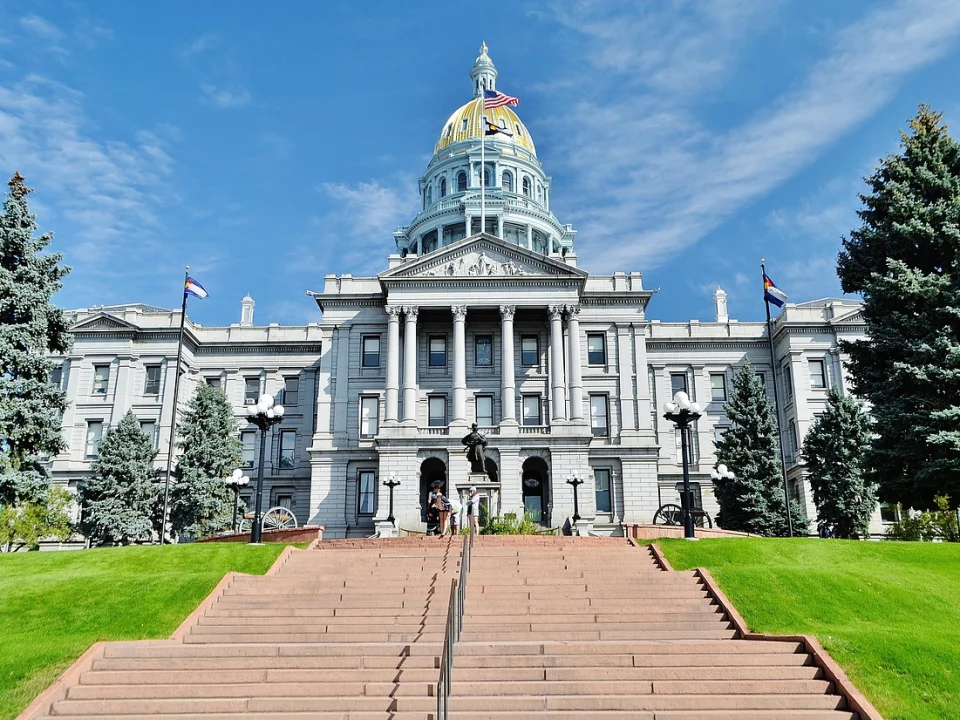
The Colorado teaching license comes from the Department of Education (CDE). The application fee is $90 for Colorado program completers and $110 for a first license after a program in another state, and fingerprints through the Colorado Bureau of Investigation cost $39.50 plus the vendor’s own charge (CDE checklists and CBI’s pages, read 13 November 2026).
The Washington teaching certificate is issued by the Office of Superintendent of Public Instruction (OSPI). OSPI’s fee for the first Residency certificate is $93, and the fingerprint check adds a $50 processing fee plus the fingerprinting office’s charge (OSPI’s pages and the Washington Administrative Code, read 13 November 2026).
Tests and costs beyond the state fee
Test fees go to the vendor. Several of the states above run their own test series: TExES in Texas, the FTCE in Florida, NYSTCE in New York, the ILTS in Illinois, the MTTC in Michigan, the OAE in Ohio and GACE in Georgia. Many other states use the Praxis. See which certification tests each state requires, and Praxis fees and passing scores for each Praxis test.
Program tuition is set by the program, not the state. The teacher certification cost calculator adds up a state’s fees as read, with your own figure for tuition.
Routes without an education degree
Each state guide lists the alternative routes its state names. Alternative teacher certification explains how these routes work across states. If a program is involved, check it on the state’s own approved-program list first; how to check that a program is state-approved shows where each list is.
Moving states and the compact
A license from one state does not let you teach in another. The receiving state reviews the file and may ask for its own tests or coursework.
The Interstate Teacher Mobility Compact is enacted by each member in its own law. As read on its map on 13 November 2026, it has 14 member states, among them Colorado, Florida, Oklahoma, Pennsylvania and Washington (teachercompact.org). Each member decides how it handles compact applications, and only some publish a compact route. Colorado issues an initial license within 30 days to some teachers licensed in other compact states under SB26-126 until it starts issuing compact licenses (as read 12 November 2026). No commission rule sets a start date as read on 13 November 2026. The reciprocity and compact checker sets a destination state’s route next to its compact status.
Substitutes, emergency licenses and renewal
The minimum to substitute runs from a high school diploma in some states to a bachelor’s degree in others; how to become a substitute teacher sets them side by side. Districts usually request emergency and provisional licenses; the emergency teaching certificate page covers them. Renewal cycles run 5 years in most states read, with their own hour counts; see renewal hours and cycles by state.
The other 36 states and DC
Until each state has its own guide, the 51-row table covers it. As of 13 November 2026, 31 states have their main fields read in official text (14 of them with the guides above), 15 states and DC are partly read, and Arizona, Mississippi, Tennessee and Virginia are not confirmed at the agency. A field not confirmed says so and links the agency.
A reading path
- Open your state’s guide above, or its row in the table if it has no guide yet, and follow its link to the agency.
- Read the agency’s page for your route in full, exceptions included; that page is what the agency applies.
- Check the tests the state names, and register only on the vendor’s own site.
- Already licensed? Read the destination state’s out-of-state route.
Rules and fees checked on 13 November 2026.